Exterior rendering
Lime Rendering in West Bridgford | Older Masonry and Detail
A traditional wall needs a material decision based on its construction and condition. Lime rendering may be appropriate, but the specification should explain why it suits that particular fabric. Retained brick details, old coatings and previous repairs all matter. A general claim about breathability is not enough to describe the work.

On this page
Start with the fabric that survives
An older house may contain substantial later alterations. A bay, porch or rear wall can be a different age and construction from the main building. Establish what is known through inspection and reliable records, and identify uncertain areas. The date attached to the property does not prove that every surface should receive the same treatment.
Existing render and paint may also differ between elevations. Note sound areas, repairs and places where the covering has detached. A competent assessment should identify the materials where necessary and consider their relationship with the masonry. Avoid describing every hard patch as cement or every softer surface as lime solely from a photograph.
The Rushcliffe VOA age figure is borough-wide context. It does not identify the construction of a West Bridgford wall or establish a diagnosis. Use local records to understand the area while keeping the material specification tied to the actual building and the evidence gathered for its proposed work.
- Stone or brick masonry Cleaned of loose material and dampened so it does not draw water out too fast.
- First (scratch) coat Often haired; scratched to give the next coat a key.
- Second (floating) coat Applied once the first has firmed up; follows the line of the wall.
- Finish coat Thin final coat, kept damp and shaded while it cures.
- Limewash or mineral paint Optional decoration that keeps the wall permeable.
Wall on the left, finish on the right. Not to scale: coats, thicknesses and primers follow the chosen manufacturer’s system and the condition of the wall.
Retain important details through the intervention
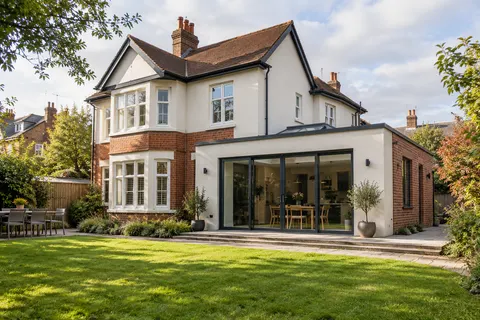
Brick bands, decorative openings and projecting elements can be vulnerable during removal and re-rendering. Identify what remains and how it will be protected. The new finish should meet those features with an appropriate detail rather than conceal them because their edges are difficult. Where historic fabric is involved, suitable specialist advice may be needed.
Check the relevant designation records before changing an exterior. Rushcliffe’s Edwalton conservation material has a defined boundary and distinguishes different character areas. It does not apply to all West Bridgford by default. Listed status and the nature of the proposed alteration are separate questions that also need consideration where relevant.
A traditional material does not automatically make every proposed change acceptable. Keep the required decisions or advice with the design information. The selected texture, colour and extent should reflect those requirements, rather than being approved first and checked against them only after material has been ordered.
Balance removal with the risk to masonry
An unsuitable existing covering may need intervention, but stripping can damage the background. SPAB’s guidance on lime and cement renders highlights this risk. Use a suitable trial to understand the layers and how they separate, with the method and extent decided by the appropriate person. A small patch that releases easily may not represent the whole elevation.
The trial should inform whether to retain, repair or remove particular areas. It is not merely a preliminary demonstration before an already fixed decision to strip everything. If damage occurs, review the approach. Keep the intended replacement finish in mind so that newly exposed masonry is not left without an agreed next stage.
Pebbledash removal on traditional fabric needs this same care. The objective may be a compatible new render rather than exposed brick, whose condition remains uncertain. The removal and replacement scope should be connected, with a procedure for findings that alter the preparation or the reasonable extent of work.
| Subject | Evidence needed |
|---|---|
| Construction | Masonry type, alterations and existing layers |
| Condition | Sound areas, damage and possible wetting sources |
| Removal | Trial response and risk to the background |
| Details | Retained features and suitable connections |
| Specification | Materials, coats, texture and curing requirements |
Specify the finish and its curing requirements
Lime renders vary in binder, aggregate and application. The appropriate specification should name the intended materials and explain the preparation, coats and finish. It should relate to the wall’s condition and exposure rather than use a generic mix chosen for convenience. Any retained coatings or repairs need to be considered in that assessment.
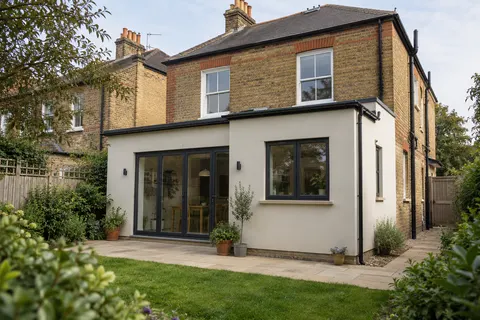
A physical sample helps establish texture and colour, especially beside retained brick or a modern extension. Different materials may not produce identical surfaces, even when their shades are related. A deliberate junction can let each part of the building receive a suitable treatment while still creating a coherent appearance.
Application, protection and curing need a realistic programme based on the selected materials and conditions. Do not assume a lime package should follow the same timing as an unrelated decorative coating. Access may need to remain for the relevant stages, and the arrangements for weather protection should be understood before work begins.
Maintain the details that keep the wall working
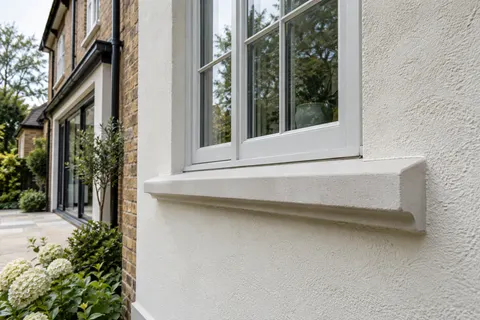
Rainwater defects should be addressed alongside the render. A gutter leak or inadequate sill detail can repeatedly wet a local area regardless of the compatibility of the new finish. Record those concerns and coordinate the necessary repairs. The wall should not receive a cosmetic treatment while a known source of deterioration remains untouched.
Keep the installed material information for future work. Small repairs should be assessed for compatibility with the retained surface and background, not made with whichever product is readily available. The render repair guide helps define the damaged area and expected appearance. A modest compatible repair may be more appropriate than replacing sound work solely to obtain a uniformly new surface.
Later decorative treatment also requires care. The suitability of a coating depends on the wall and the existing system. Avoid assuming that any product labelled exterior paint is appropriate for a lime finish. Refer to the actual specification and suitable specialist or manufacturer guidance before changing the surface.
Common questions
Does every pre-1919 house need lime render?
Age alone is not a complete specification. The actual construction, existing materials and condition need assessment, including later alterations.
Can hard render be removed without damage?
That cannot be guaranteed in advance. A suitable trial and careful assessment help establish the risk and a proportionate method.
Can traditional details stay exposed?
Potentially, with their condition, protection and adjoining finish detail properly considered. Relevant heritage requirements also need checking.
Is lime simply a more breathable paint?
No. It is a material approach to the render itself, with specific preparation, application and curing requirements.
See housing and planning information for West Bridgford and nearby places, including the source and geography behind each figure.